Highway 91 Revisited
Melanie Figg
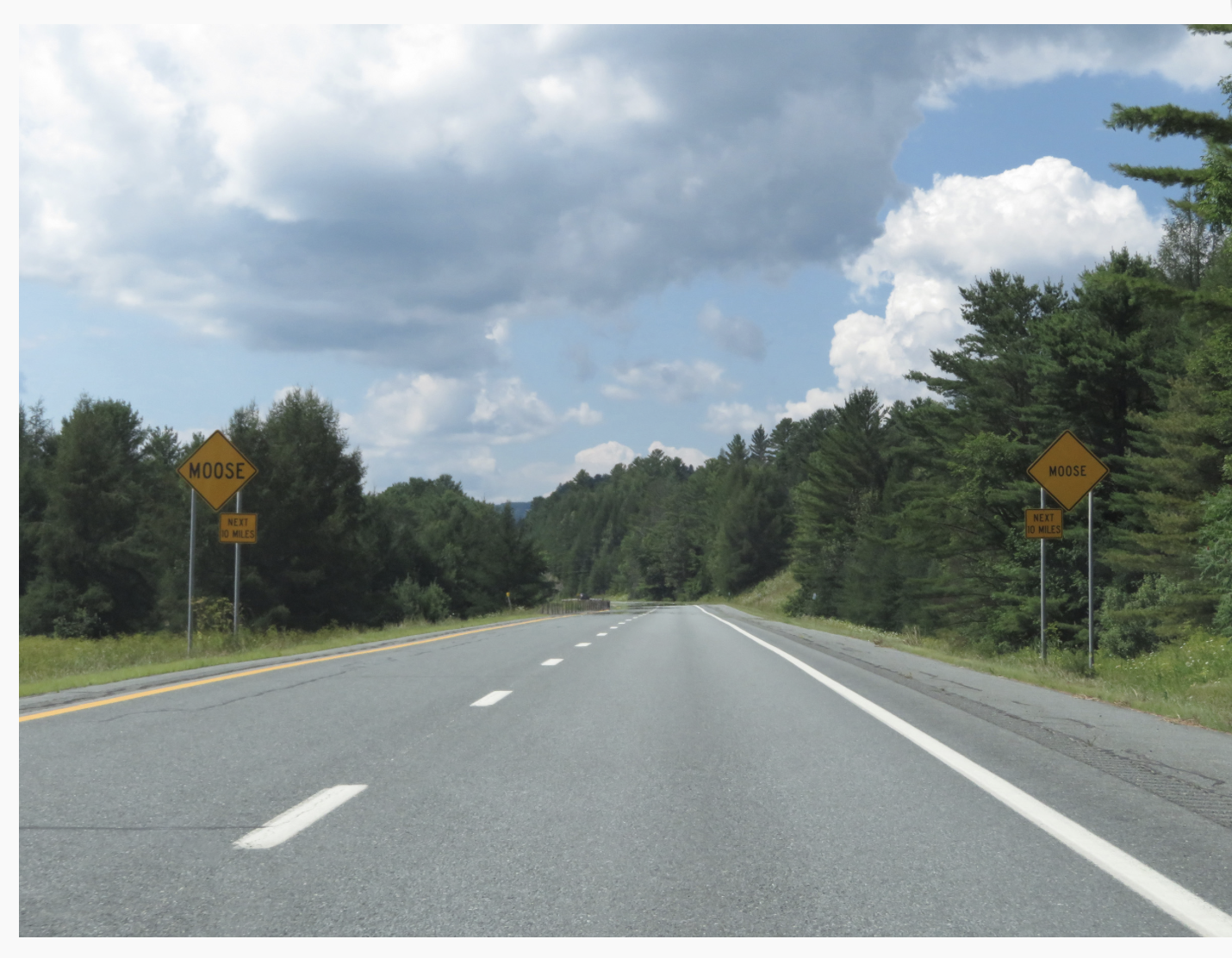
I-91
Word Count 1061
In the 1980s a guy drove up and down I-91 along the Connecticut River dividing Vermont and New Hampshire to stalk and stab at least nine women. He left them scattered in the valley where I grew up. When did I first hear about the Connecticut Valley Serial Killer? When we heard Barb was missing? I babysat her little boy when I was fifteen; she was friends with my mom and sister. I don’t think the killer was part of the story when I learned Heidi was murdered, but I could be wrong about that. She was in my sophomore class, she used to bully me, but maybe we had moved by that time. Did mom read it to me from the Valley News and ask if I knew her?
I’d forgotten about Barb and Heidi for over twenty years, then remembered the Serial Killer a few years ago—why I don’t know. Is not remembering the same as forgetting?
I want to remember, I want to know more, I want to figure out how I could have forgotten about this, to figure out how it informed my girlhood—being a teenager as women and girls were abducted and murdered and found later nearby. Like those ads for missing kids on the milk cartons that I read each morning while I ate my cereal. Like all those horror movies where the girls were killed while they undressed.
Even if I didn’t know much of the details then—that nearly half of the women hitchhiked like my older sister did, that many of the women worked in hospitals or were nurses like my mom, that one was assaulted in her own house—surely such intentional and random violence had left its mark on me? As a girl in a rural area I was trained to be scared, to understand that to be a girl was to be a target, that rape was only a matter of time. I needed to always be vigilant. I wasn’t safe. The world isn’t safe for girls.
# # #
I scoured the internet for news articles, have dozens of bookmarks and printouts, even bought a terrible true crime book about the case. I began to scan online true crime forums and listservs, but the case was so long ago, most postings are decades old. I can see through the silly theories and the willful conjectures that are clearly bravado. The online true crime people are a stubborn bunch, convinced they’ll crack a cold case. But isn’t that what I’m doing? Don’t I distrust the cops now, too? Is my search for answers any more important because I knew two of the nine women murdered?
While digging around online I find a comment buried in a GoodReads review of that terrible true crime book
***** April 26, 2017
When I was a child I would make frequent trips with my family to Lachine Canada to visit my grandparents, and one of the pit-stops along the way up there was in White River Junction, Vermont to a Howard Johnson’s restaurant. On the lobby wall of that restaurant was a huge map with buttons on it, and when you pushed a button, a peg on the map would light up. It would indicate the position where a woman was last seen and then another area would light up-depending on what button you pressed-indicating the body dump of that or another person. I recall a truck driver swinging himself from around the counter after seeing me interacting curiously with the buttons and its sundry lot of lit pegs. He hopped off and began to regale me about a monster in the woods, much to my parents shock and anger. It was then that I first heard and read—via the bulletin board—of the Connecticut River Valley Killer.
That Howard Johnson’s was near the V.A., we could see it driving past on route 91 to go to the department stores for school clothes or to eat at the McDonald’s. I don’t remember ever eating at HoJo’s, as my dad called it, so what am I remembering? A photo from my research? A black and white photograph will often trick us into becoming one of our memories.
I know/remember that kind of place: the huge plastic menus, the height of the table in the booth that made eating awkward, the way my thighs caught on the plastic seat as I slid out when we were done.
I know/remember those kinds of low-tech maps where you push a button and a small light turns on. Some museums and park stations still have them. Often the bulbs are broken, and your inquiry goes nowhere. Or rather, the answer never comes. So, you’re stalled in the act of guessing, which ironically is the whole point of those interactive boards: to teach kids to look for their own answers first, to use the light as a game to confirm they’re right, no matter how long they have to wait, frustrated because they know the answer but are not rewarded with light.
I want to trust that guy’s memory of Howard Johnson’s. If his memory is reliable, then maybe so is mine. I want to trust his memory, yet I don’t want to believe him. A map of murdered women? In a Howard Johnson’s restaurant? What was the manager thinking? Who charted the murder scenes and replaced the women’s bodies with tiny bulbs of light? Who paid for that?
The cops still haven’t found him. The lone survivor (a miraculous story of superhuman will) gave officers a detailed description and half the numbers of his license plate, and still the case went cold. Same history lesson as always, whether across time and continents, or right in your own backyard: women are expendable and that is the future for girls.
Did I always think this when I was young? Trying to remember is like when you get a whiff of something and it’s gone, and you know if you panic it will be gone for good, so you hunch down inside, breath in slow again, with a pen poised on the page in your mind to take note, and you try to bring your attention and detective skills to the task:But it’s gone. You sit there unwinding, defeated, and adrift. Blank as a page, as a map with no bulbs that still work.
Melanie writes personal essays and poetry. Her award-winning debut collection, Trace, was named one of the seven Best Inde Poetry Books of the year by Kirkus Reviews (starred review). She’s won many grants and awards for her writing, including a Fellowship with the NEA. Her writing has appeared in dozens of journals including Hippocampus, RUMPUS, Colorado Review, Nimrod, and others. Melanie works remotely with writers. www.melaniefigg.net