Flesh Of His Flesh
Sallie Reynolds
Word Count 2025
Eighty-seven years ago, my father, a doctor, wanted a son so desperately he read “male” in the speedy tempo of my fetal heart. When I was lifted out, a Caesarian baby, unstressed and unwrinkled, he said, Oh hell, this one’s got the wrong plumbing. All my childhood, that line ate into me. He was still saying it seventeen years later when I left home.
Ten years after that, on Father’s Day, he put a gun in his mouth and pulled the trigger.
I was twenty-seven, he was sixty-one. I stood by the bed where he died and deliberately shut him out of my mind. In half a century, I’ve thought of him thousands of times. But the thoughts are dry. I blow them away.
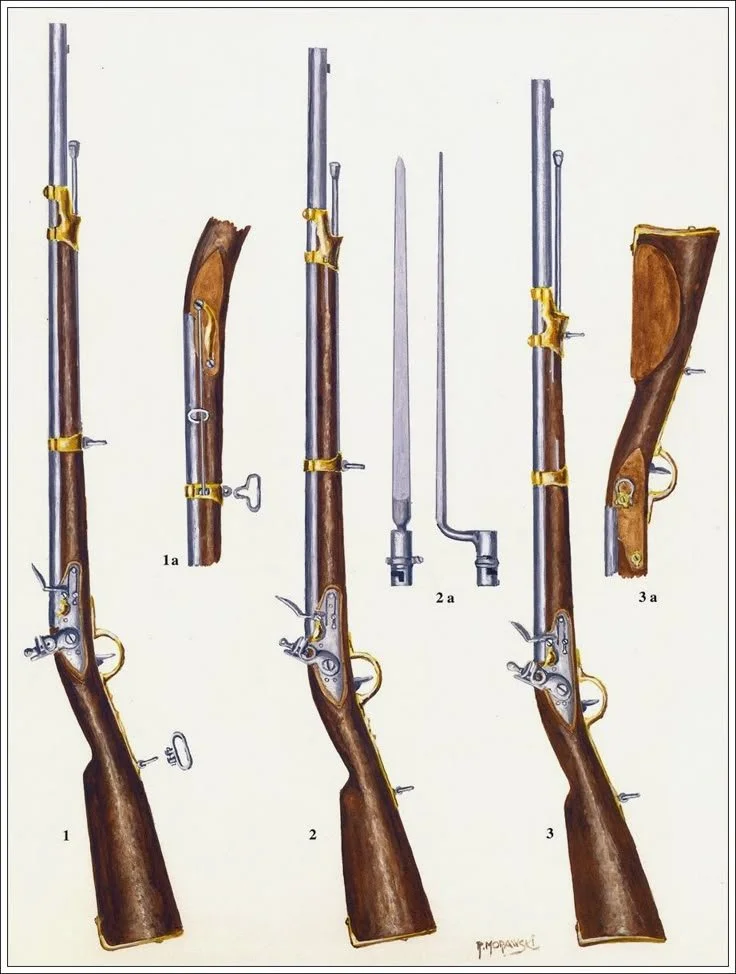
The other day, my cousin Theo sent me an email: “In 1955, your father, known to boy-me as Uncle Doc, gave me an 1862 London Armoury musket for my 15th birthday. He’d acquired it from a sailor whose child he delivered. The sailor was short on cash and offered the musket for payment. I cherished it for many years. Yesterday I sold it for $1980 at a gun show in Nashville. Thank you, Uncle Doc! So, whaddya make of that?”
Crack! went the old sealed mind. An odd memory slipped out. When I was seven, my mother took me on wild rides, burning up the back-roads, wind whipping through the car windows, dust rolling behind. “Hang on!” she’d cry. And stamp on the accelerator. Once we hit a chicken, and she sent me to the farmhouse with five dollars to say we were sorry. Shortly afterward, she became ill. When I was fifteen, she died. Her old Roadmaster was still around. I had my license. I wanted it.
Oh no, my father said, that car’s way too much for you. He gave me a little second-hand coupe, so he wouldn’t have to drive me to school. In no time, I rattled it to bits.
What could I say to Cousin Theo? Half-ashamed of seeing love in a gun and dismissal in a car, I wrote: “Have a sip of something you like, toast your Uncle Doc.”
“Actually,” he shot back, “he gave me two guns. The second was a muzzle-loading shotgun he acquired from the same sailor for a 2nd baby.”
My father owned three guns, a rifle, a shotgun, and a World War Two Luger, the famous Pistole Parabellum. There was something secretive about that Luger. – a mean little animal with pricked ears, long snout, and a sneer. My father hadn’t served in the war, never said where it came from, I never saw him take it out. Tucked into a cracked leather holster, it lived for 20 years under his mattress. Snoop that I was, I found it.
Theo added a PS: Wish you’d had a more positive relationship with him.
What we had was a war. My father tried for nearly three decades to turn me into something I wasn’t. If I couldn’t be the son, I had to be the perfect 1950s daughter, future wife to someone just like him. I defied him with all my puny might.
He started by ignoring me: didn’t hug me, talk to me, kiss me good-night. I don’t think he really looked at me. Except once. When I was six, he took me – just the one time – on a farm call, and I watched him remove a little piece of steel from a man’s eye. In the dim farmhouse, under a sorry bare lightbulb, his patient lay, strapped to the kitchen table. My father lifted me onto a tall stool, put a kerosene lantern in my hands. “Hold this just so.” As he worked, the lamp grew hot, but I held on. I wouldn’t have let go if it had been a burning serpent.
An eye – round as a marble, milky white, bulged through stretched lids. My father’s bloody fingers held it in a gripper. A mad-eye, alive, locked on him, daring to look. Little clink of metal and the eye slowly closed. My father took the lamp and lifted me down. He said, “Thank you for your help.”
That was all I heard.
When I was fifteen our major battle began – over a Maybelline eyebrow pencil. The war itself started earlier, when I was fourteen and Mother was still alive. She told him I was menstruating. He sat me down, laid out my life: Your purpose is to produce a legitimate, intelligent male child. That’s what you have the apparatus for. He arranged for the “basic” pelvic exam, ugly rite of passage for girls back then. He took me to a buddy from med-school – “Uncle Buck” put his thick hands deep and painfully into my virgin flesh. You’ll soon outgrow this baby fat and become a proper woman!
On the way home in the car, my father began obsessing over my clothes, my attitudes, my behavior.
You’re a disgrace. Why can’t you be like those nice girls, Ann Paige and what’s her name, Fannie Marie? He didn’t even get their names straight.
When Mother died, I hacked off my hair. Little Miss Dog Turd of 1954, he sneered.
In the mirror, my face, just forming its adult contours, began to disintegrate, edges fading, features blurring. In Mother’s things, I found the Maybelline pencil and drew bold lines around my eyes, black Cleopatra-eyes that would not look away.
Go wash that filth off, he shouted. I washed. Reapplied. Round and round we went. He paid those girls he admired 5 dollars apiece to trap me in the school bathroom, scrub off the black lines, paint my lips with thick lipstick, coat my cheeks with pancake makeup. The 1950s’ “good girl” mask, to attract the boys who’d go on to be just like him.
“In ancient Egypt,” I hissed into their smug faces, “red mouths like yours meant you were a whore who sucked . . .” I was barely 15 “. . . cock.”
I hid the pencil.
If that thing is in this house, I’ll find it, he bragged, pawing through my dresser, turning out my pockets, shaking my bookbag.
We stirred each other till we smoked.
A pencil costing 30 cents. But it was that one we both had to have.
At seventeen, I set out to prove I had the “right apparatus.” He’d gone to a big university and med school. Cousin Theo followed suit. In high-school, I made straight As, even in science. So I applied to Duke. Naïve me! Southern women in the 1950s weren’t doctors, lawyers, Indian Chiefs, we didn’t even get into the big schools. I wound up in the local Baptist college, where science classes were for boys, and girls were locked in at night.
Two years later, I transferred to a Big Ten university, where women were not restricted. I married, qualified as a lab technician, and – like a good wife – worked my husband’s way to his PhD. Then it was to be my turn. Alas, my husband took a job in a small college town, no post-grad possibilities. I’d just have to wait.
That year, on my 22nd birthday, my husband shot himself.
He left the house in the morning without a word. Late that afternoon, I found him.
My father said, By god, we all look down the gun barrel, but we don’t pull the trigger.
Only there was that Luger, waiting under the mattress.
There are no instruction-manuals for survivors. No quick route through the who-knows-how-many days of shock, terror, lethargy. The dead are not mentioned. Survivors are treated with silent suspicion. People used to cross the street to avoid me.
My father took me to his house, but he had no idea what to do with me or my baby, who wasn’t even two. He began to wonder, aloud, was I going to commit suicide, too? Did my husband and I have “a pact?” My stepmother was so disturbed, she told me to leave. I was offered a lab job in a city well away from him, and a friend kept my son and me alive while I slowly worked my way out of the dark.
My father’s burial was small and private – just me, my uncle, my aunts. Afterward, he was not mentioned, not even when Theo wrote a family history. Why? Suicide, he said, would upset the family.
At the gathering, my stepmother told me my father had become obsessed over money, convinced the IRS was after him. “It was absurd,” she said. The day before he died, she went to church without him, and coming home, she couldn’t get into the house. She had to break a window.
The next night, he went upstairs early. He made very sure she wouldn’t hear the shot.
*
My uncle and aunts went on and on about “the note.” The last words. Did he have cancer? What did they think suicides ever say? It’s your fault. It’s not your fault. He didn’t leave a note, but a week before Father’s Day, after more than a year of silence, I’d sent him a letter. Forgive me, I wrote. I love you. Why did I do that? It wasn’t love I felt, or forgiveness I wanted. My stepmother said he never got the letter.
So there I stood, where he’d died, running my fingers over the headboard. Why shoot yourself in your marital bed? Why not pills? Why Father’s Day? Why did my husband kill himself on my birthday?
The hole was filled in, sanded smooth, the bed painted shining white. I admired my stepmother for that. He left a terrible indictment and she scrubbed away the blood and brains, bought new mattress, pillows, sheets. She painted him right out.
So did I.
Now, sixty years later, reading and rereading Cousin Theo’s emails, the old pain stirred again. I called my son, who by some miracle, lives well: He was two when his father died, six when my father died. The next year, his father’s mother drank laudanum.
For god’s sake, don’t tell your son, people warned me. But it was clear to me that secrets can kill. So I did tell him. And at sixty-four, he has outlived them all.
“What do you remember about your grandfather?” I asked.
“Once when we visited him,” he said, “I followed him out into the pasture. I think he was helping a cow have a calf. I said, What was the black dog doing inside the cow? We all laughed. But he had to be insane to do what he did.”
Until he said it, I really never saw that. But now I remembered my father’s behavior when my husband died, the long, discordant letters when I was in college: the Furies hound me for what I did to your mother. What had he done? Infidelities, disrespect, ordinary cruelties? He wrote: I married two temporaries. Both women had been married before and Mother was nearly ten years older.
In his mind, no one could ever be enough. We all look down the gun barrel . . .
A last email arrives from Theo, a photo of a birthday note on the flyleaf of a special edition of North American Wildlife. “For Young Theodoric,” my father wrote. “One of the liveliest animals in the world. Love, Uncle Doc.”
“What did I do to deserve such gifts?” Theo asks. “Those collector’s guns. I didn’t know him. I didn’t even go to his funeral.”
He didn’t have to do anything. My father invented the longed-for son, as he and I together invented the great man and his dismal daughter.
Love, Uncle Doc.
Jesus! That handwriting is him. More than any words or even a picture could ever be. It grips me. I feel him. Not love or forgiveness. Him. Lying on that bed – in the flesh – younger flesh than mine by 25 years. Pen in his breast-pocket, loose change in his pants. A tang of hospital soap and cigarettes.
He wraps a blanket around his head. Leaves a hole in the swaddling so he can slip in the Luger. Jam the long cold barrel past his teeth. Bitter metal on his tongue.
This isn’t even grief. We’re not the man and the child, tearing at each other. Not the demented adults, locked in destruction.
I was once what he had. He’s what I have. This is the best we can do:
In the shadows, in the wavering light of a single dim bulb, he puts a bright lantern into small, steady hands. And draws a sliver of bloody steel out of a frightened man’s eye.
Sallie is 87, lives back of beyond in Northern California with her painter-writer-mechanic husband, a grand dog, and two hawks (she’s a licensed falconer.) She had to live this long in order to become a decent human being. Her stories are here and there, her two novels are on Amazon.