Burn This
Stephanie Feuer
Word Count 1053
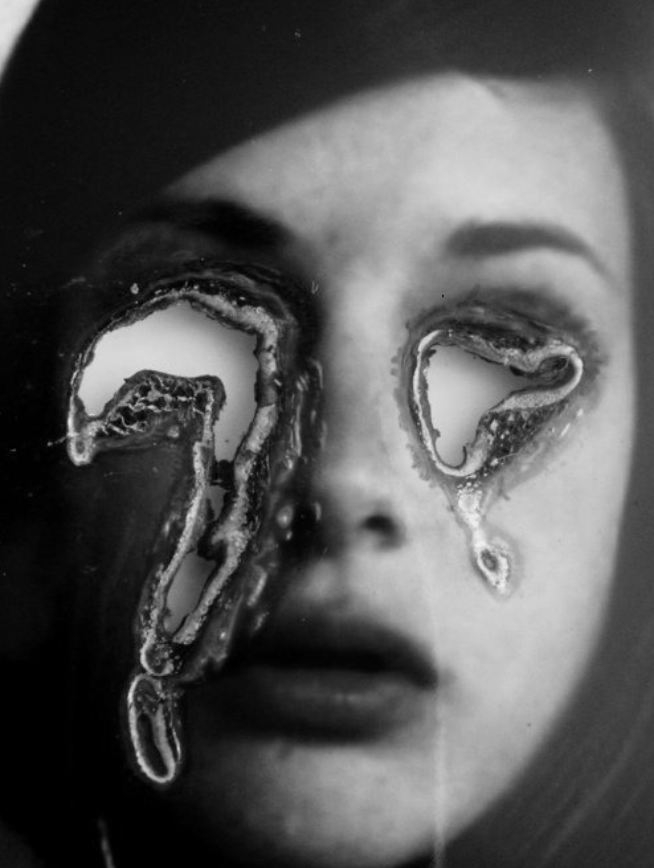
My arm has a topography all its own, a map of suffering rendered in flesh. A mottled and discolored amoeba-shaped scar along my bicep, and its companion down the length of my forearm, are souvenirs of a morning that started like any other. I was dressed for breakfast in the blue plaid bell-sleeved shirt, soft like a baby’s bunting. I leaned in to smell fresh ground beans in the cone of the Melitta pot on the gas range. My shirt grazed the gas burner.
A sunshine yellow spark licked at the end of a thread that hung from the ragged sleeve. With residue oil from the previous night’s popcorn on the burner guard, the spark became a cackle of flame which jumped across my tiny kitchen. The runt of it landed on my hair.
The tiny kitchen filled with a putrid smell, the smell of burning hair, burning flesh. I recognized the smell of burning hair, burning flesh. Feeling followed, lightning to thunder; the pain was unspeakable. In an instant, I was outside myself, but at the same time, frozen in disbelief that this could be happening to me and desperate to act fast, as the flames, no longer a suggestion, rose up, cherry red around me like a cage.
With my bare hands, I slapped down the flames as they pecked at my face, my hair, my breast, my arm. Stop, drop and Roll. I remembered the grade school fire safety drills. Starve the fire of oxygen. The green blanket on my futon on the floor was my salvation. I wrapped it tight around me to save my face, save my breast.
Immolation. My arm was the sacrifice, as flame ate through to muscle.
In the hospital the doctor removed charred skin and more from the length of my arm. The pain was searing despite senses dulled by morphine and pills. A body remembers. My body cried out for cover.
Then came skins grafts. With a cold metal blade, they peeled a strip of skin from my rear like a potato, then “harvested” it to grow in the craters that were now the surface of my arm. After skin grafts and the impossible pain of debridement and bandage changes, my skin grew back over my raw flesh, tight and itchy.
My arm was marred with angry red scars, fibrous and inflamed. Little raised lines of brown flesh, mountains of will. White pockets like lakes, the depth of pain unfathomable. I was healed. I was ugly.
I felt cheated. I railed to my doctor after a physical therapy session where I could still barely lift my own arm. He was sympathetic to my tears of self-pity, but the experience was mine now, he told me. Bad things happen. I had to own it.
I didn’t get what he was saying, so he made a suggestion. I could help my own healing by helping others. He arranged for me to visit a patient of his, a boy who’d been playing with matches and sustained burns over 40% of his little body.
I visited him several times through his first round of surgeries and it seemed to help. I was at least a distraction from the countless hours he had to spend in his hospital bed, and respite for his parents who were visibly relieved that I did not wince at their son’s raw and ravaged skin.
Hiding my scarred arm under long sleeves worked until the weather got warm. I developed a faux coy way of standing with my arm behind my back. Darkness was my friend. The scars settled in and my skin became more even in color over time. I learned to tell a soundbite version of my fire story when someone would inevitably say, “what happened to you?” when they spied my arm, craggy and maculated.
A decade or so later, a friend’s cousin was one of the victims of an explosion and suffered intense burns. I agreed to go with him to visit, this time thinking perhaps I really could help. Hadn’t I, after all, conquered my reticence, slowly peeling back the layers, showing my mottled arm. I had even shown my scar in a sleeveless wedding dress and endured the stares of a prim-blonde bridesmaid who saw no beauty in my mottled muscle, my map of recovery.
I wore a sleeveless shirt under my winter layers, hoping to show that skin grafts would look less angry with time, and assure her the pain would fade.
“Things will never be the same,” my friend’s cousin said, barely able to sit up in her bed. The last light of the afternoon streamed in; they’d given her the room with a really good view, as if looking outside could change her perspective or ease the pain of being seriously burned on her face, chest and arms. Still bandaged in parts, the doctors had kept her from a mirror until the latest in her series of skin grafts. She’d recently seen her face. “My kids,” she was concerned, “they’ll look at my face and see a monster.”
There was nothing I could say. I’d saved mine.
My friend looked out the window.
I held her gaze, the only thing I could do, to not look away, to not squirm in the face of her disfigurement. “No, they’ll see you. They know you from the inside.” But they were words to her. She already knew what a struggle it would be to live with, much less own her scars.
A few years later, on the first really warm day of the year, the first sleeveless day, a day that still gives me pause, despite how I’ve grown to accept my scars, I was on the city bus with my son, then in second grade. I noticed a kid from the grade above him staring at me. Or more specifically, at the scar on my arm.
I looked over and expected him to look away in that guilty, bashful way that makes little boys look like naughty puppies. Instead he looked straight at me and rolled up his short sleeve.
“Boiling water,” he said baring his burn scar that crept up to his shoulder.
“Kitchen fire,” I said, equally as matter-of-factly, looking over at my scarred left arm, a map of change, rendered in flesh. a topography all my own.
Stephanie is an award-winning writer, marketing executive, and co-founder of the World Taste & Smell Association. Her work has been published in The New York Times, Smithsonian Magazine, NBC News THINK, The New York Daily News, The Boston Herald, Slate, Good Housekeeping, Narratively, Next Avenue, The Forward, and numerous other publications. Stephanie is the author of the young adult novel, Drawing Amanda, and is working on both a botanical-themed mystery and a narrative nonfiction book about smell, perception, and memory.