Weigh Less
Kresha Richman Warnock
Word Count 1224
As everyone from Oprah Winfrey to Bari Weiss was touting the use of GLP-1 medications, like Ozempic, for weight loss, I asked my own doctor to refer me to a specialist so I could get on board. My new doc diagnosed me as a “binge eater.” What?? I’d never been the one to stop at McDonald’s on the way home and gobble down a couple of Big Macs or consume a gallon of ice cream by myself. “Have you ever not been able to stop yourself from eating when you weren’t hungry?” she asked. I thought back to all those secret bites in my life.
I made it to five feet, one-1/2 inches tall. All through my slightly round childhood, folks said I would “shoot up” and be thin, but my genes fooled them, and I stayed short and plump. I’m not sure when my mother realized that she had an overweight daughter. At some point, she ordered me to stop eating between meals. But mom always kept the cookie jar full, right out there on the kitchen counter. Once a week she baked four loaves of sweet, yeasty white bread. It was luscious hot out of the oven, but it was also yummy at room temperature. I became adept at cutting off “just a sliver and eating it on the sly when no one was looking.
My mother always bragged that before kids, she’d had a twenty-four-inch waist; it wasn’t much wider after birthing three of us. She sewed all her own clothes; sewed most of ours, though my brother got to wear store-bought jeans. She dressed herself in waist-line flattering pleated wool skirts. No Jackie-Kennedy-straight or A-lines, like the ones the first lady wore with boxy French-inspired jackets. We all admired Mrs. Kennedy as a style setter, but Mom told me on the sly, “I think Jackie wears those jackets to hide her waist.” (Although during the time she was first lady, she was 5 feet 7 inches tall and weighed between 115 and 120 pounds, lean as could be.) It wasn’t until I was much older that I figured out there were clothes I looked good in.
Mom wasn’t alone in her concern for my thinness. When I was fourteen, the doctor looked at the scale and said, “You weigh one-hundred forty pounds! What are you going to weigh when you grow up?” My well-meaning drivers’ ed instructor, an Ichabod Crane-thin grad student, explained out of the blue, “People like you and me will make it on our personalities, not our looks.” I still can’t parallel park, but I’ll always remember the man’s words.
In 1965, when I was a middle-teen,Tina was my only friend who had a little extra padding, and we did the first actual diet I was on together: the ice cream diet. At our junior high school, they offered homemade ice cream sandwiches at lunchtime — two generous circles of chocolate cookie filled with a slab of the frozen delight. Tina and I decided that if we skipped the regular meal and spent our lunch money on these treats, we’d lose weight. It worked for her because she starved herself the rest of the day and became boy-attracting thin. (We didn’t know about eating disorders in those days.) For me, the cookie jar was still on the counter when I got home, and I certainly didn’t skip my regular meals.
My most memorable attempt at dieting involved eating grapefruit and hard- boiled eggs, with a little cabbage thrown in for two weeks, the touted “Mayo Clinic Diet” of the 1960’s. Not actually from THE Mayo Clinic; definitely not a practical way to lose weight. I tried this and many fad diets, but as I failed to lose, Mom threatened to stop making me any new clothes. I cried to my dad, “Does she want me to run through the streets naked?” He laughed; what could he say?
My first year in college I lived in the dorms. Food was only available at meals, I chose to eat dinner and skipped the rest. I got svelte for a few months. My mother cheered; my aunt, a photographer, took special portraits to commemorate the event. I flew to New York, and my very fashionable grandmother bought me new clothes, including a navy linen dress, pleats down the front with a white Peter Pan collar, loose enough to fit, even as, the next year in a college apartment with its own kitchen, I gained back most of the weight I’d starved myself to lose. A college friend had the same dress in brown. We laughed over the coincidence until some guy compared us and chortled to my friend, “How come she looks like she’s pregnant and you look so good?” The blue dress went to the back of the closet.
Unfortunately, the doctor who had predicted my future fatness was correct. I had two kids, never lost the weight I gained with each of them. I went to Weight Watchers, quit and rejoined dozens of times. I had some success there a few years ago, but then Covid hit, and I was retired and stuck at home all day. I couldn’t blame my mother’s cookie jar for my snacking; I’d had my own kitchen for years, kept most sweets out, and still managed to find ways to nibble my weight back on.
When my first grandbaby arrived, I wanted be able to get down on the floor and play with her, to be able to take her to the playground by myself. I wanted to see her Bat Mitzvah, maybe even her high school graduation. If losing twenty or thirty pounds would increase my odds of accomplishing that, I was all in.
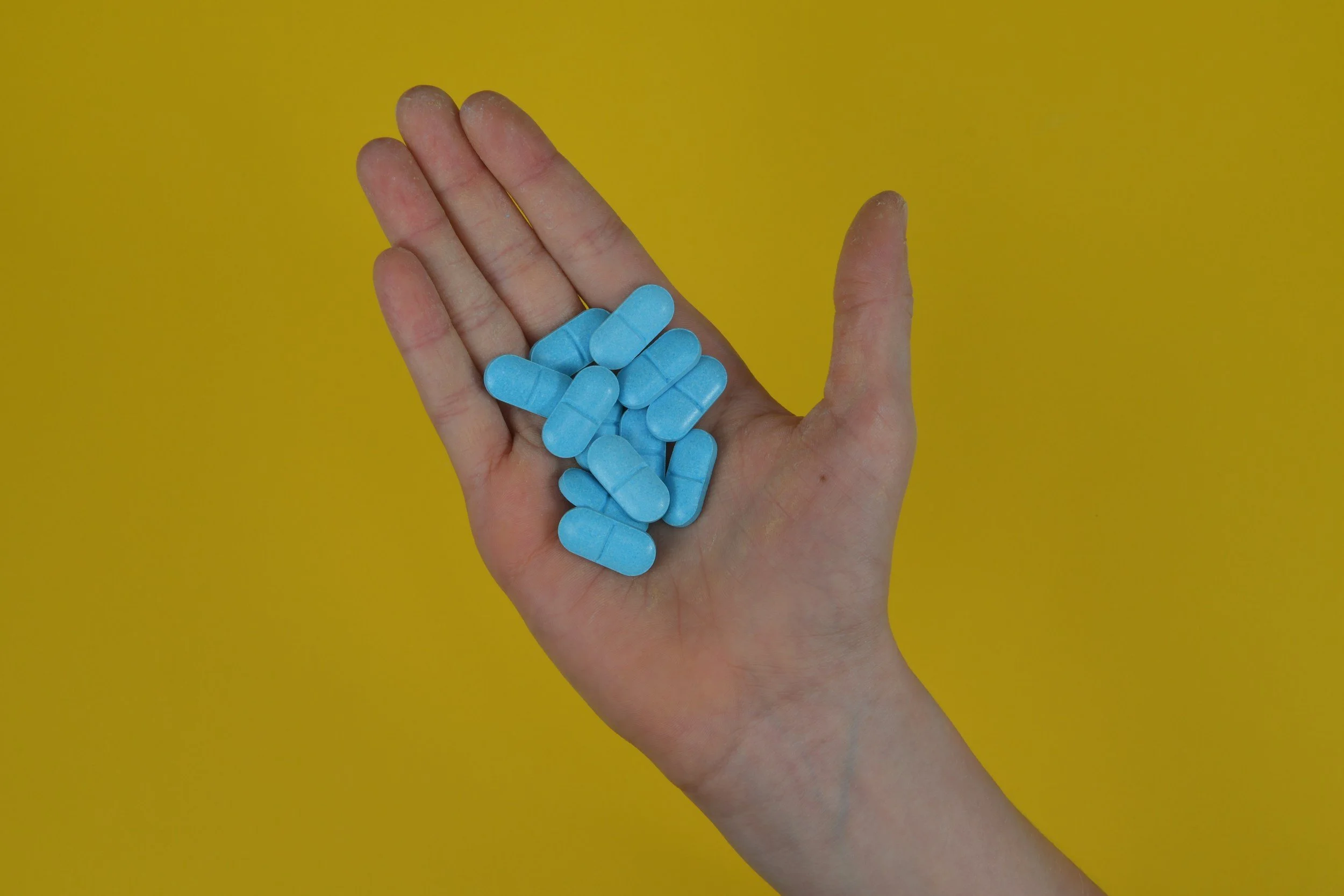
I decided to try the medical approach. And then learned that Medicare won’t pay for weight-loss medications unless you have certain comorbidities like diabetes. The GLP-1 medications were too much for me to pay out of pocket. (Their costs have come down, but too late.) Instead, my doctor prescribed a less glamorous med, naltrexone/bupropion (trade name Contrave). At $99 a month, I can afford it. The med works by modifying your brain’s response to food and making you feel full faster. I don’t have to give myself a weekly jab in the stomach as you do with the Ozempic-like drugs; you just take four monster-sized blue pills every day. The medicine curbs my appetite mysteriously quieting the need to grab a bite whenever I’m bored or tired or worried.
I don’t know if this story has a happy ending.
“When can I quit taking this drug?” I asked my doctor.
“You’ll be able to cut back the dosage when you get to your goal weight, but obesity is a chronic illness.” I got the point.
For now I’m losing weight, feeling better, hope to live long, enjoy the baby. I’m not without vanity. I like clothes, and I’m not going to deny that being thinner makes shopping more fun. I admire the way my cheekbones appear when my weight is down some. I’m not after that 24-inch waist, though I have finally lost the baby weight I gained, only forty-two years ago, with my first. For now that’s adequate motivation to shove down those four blue pills every day.
Kresha is a writer living in the Pacific Northwest with her husband. She is currently working on a memoir contrasting her youthful involvement with SDS Weatherman to her current life as the mother of a Seattle Police Officer. This is her second essay published by Dorothy Parker’s Ashes and other recent work can be found in The Mother Egg Review, Judith Magazine, and Months to Years. She was nominated for a Pushcart Prize nominee in 2025 by Anodyne Magazine and won an honorable mention for her piece in the anthology Proud to Be, Vol 13. Read her essays at her website: https://kresharwarnock.com/