Comfort and Joy
Ernestine Whitman
Word Count 1350
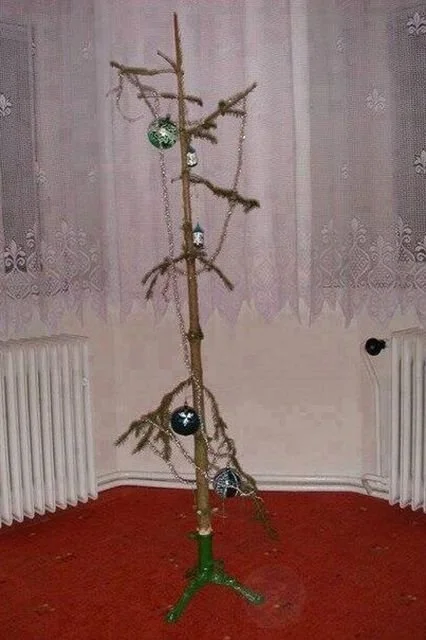
“It must have been the color scheme that sold you,” my mother in law said, peering over her glasses at the vast expanse of lime-green carpet that clashed wildly with the lurid, dark red wallpaper. Glancing at the Christmas tree, she frowned. My stomach muscles clenched. My husband Howard had suggested we not have a tree, but I wanted the house to look festive for my in-laws’ first visit, so we decorated a balsam fir piecemeal during our newborn son Elliott’s naps.
“Your room is back here,” Howard said. He picked up their luggage and led them down the short hallway.
“Well, this is certainly not our room,” Helen turned, muttering as she looked around the modest space.
For a moment, mother and son’s almost identical faces were side by side, Howard’s six-foot frame only a few inches above his mother. Fair skin, pale blue eyes, short nose, thin lips. Only their hair was different—her long, grey hair in a tight bun; Howard’s greying brown hair, long gone from the top of his head, mirroring his father’s hairline. Despite the striking facial resemblance, their personalities contrasted sharply. Thank god. Howard inherited his father’s easy-going approach to life, though Jim’s mild manner sometimes resembled detachment. Maybe someday I could detach from Helen, too.
Elliott’s cry pierced the tense atmosphere.
“Excuse me,” I said, delighted to have an excuse to exit. In the small room serving as our nursery, I picked Elliott up from the crib and sank into the wooden rocking chair. Focusing on the wallpaper of large rainbows in primary colors, I settled into the best part of being a new mother. As I listened to the gentle, rhythmic sounds of my son nursing, the muscles in my shoulders relaxed.
In March, when I saw the double lines on the pregnancy test, one of my first thoughts was that Helen might like me now that I was carrying her first grandchild. No evidence so far, but surely things would improve during the week. From the guest room Helen headed straight to the kitchen and opened the refrigerator door.
“Where’s the turkey?” she asked Howard. Their voices carried the short distance between the kitchen and nursery. Oh no. Immediately I understood the problem; Howard didn’t, but he was in her line of fire.
“Turkey?” he asked.
“Of course, turkey. Did you think we were going to eat TV dinners for Christmas?”
“No, but you said you wanted to do all the cooking, so I didn’t –”
“Didn’t think. You assumed there’d still be turkeys in the stores after we got here, two days before Christmas.”
My sympathy for Howard mixed with guilt. I should’ve made sure we weren’t supposed to get a turkey. A week ago, Helen talked to Howard (she never speaks to me on the phone), and he insisted we cook the meals their first two days here. Her response was, “You and Ernestine, cooking for guests? Hah.”
“I’ll go to the store near here and get a turkey,” Howard said. “They had quite a few when I was there yesterday.”
“What store is it?”
“ Piggly Wiggly.” I imagined Helen’s scornful look as Howard rushed on, “We like it. They actually have pretty good produce. Is there anything else I should get?”
“Just give me directions to the store. I’ll pick the turkey, if they still have any decent ones, and get some other things you probably didn’t think to buy.”
“I’ll drive you,” Howard said. “You can give me the list, and I’ll get the rest of the stuff while you select the turkey. It’ll be fast. I know the store well.”
“I’d rather do my own shopping,” Helen said.
“Mom, I’m coming with you, and I’m driving, so you might as well let me help shop.” Bravo, Howard. He almost never stood up to his mom, because the backlash made you regret it.
I heard her sigh dramatically, then the sound of the front door opening and closing, followed by the VW Rabbit firing up. Barely twenty minutes later they returned, Howard carrying one plastic sack. He placed it on the kitchen counter and removed a medium-sized turkey, which he put in our refrigerator.
“You do turn knobs, don’t you?” Helen asked when I entered the kitchen. I should’ve had a snappy comeback but, sleep-deprived and stunned, I just stared at her.
“All you have to do,” she continued with exaggerated patience, “is turn the oven on in precisely fifty minutes, wait for it to reach 300 degrees, and put in this casserole for tonight. It heats up very slowly. If you think you can handle that, I’m going back to shop for the rest of tomorrow’s meal.” Behind her, Howard rolled his eyes.
After she left, the rest of us settled in the den, Elliott in my lap, to watch ESPN’s talking heads discuss the football playoff season. Like all of Wisconsin, Appleton was militant Packers territory, but in 1986 the Packers were lousy, so the buzz was about the Bears’ chances of going to the Super Bowl.
Helen’s relentless sullenness dominated that first evening. She and Jim pretty much ignored Elliott, except for a few derisive snorts from Helen when I responded to his cries. Elliott liked to be held when he wasn’t asleep, and when he got bored with that, Howard or I walked around the house with him on our shoulder. He loved looking at the colored lights on the Christmas tree. Like most parents of newborns, Howard and I were thrilled when Elliott started noticing things beyond our faces, and were giddy with excitement when he started smiling, just in the past two weeks. I’d foolishly imagined his grandparents sharing our delight in these recent milestones.
Christmas began, like every day for the past six weeks, with Elliott’s cries of hunger, As I picked him up from the crib, he smiled at me. A wave of euphoria extinguished my exhaustion, and I launched into the idiotic high-pitched baby talk I’d sworn would never pass my lips.
After everyone got dressed, we exchanged the few gifts under the tree. Howard and I tried to create a festive mood, despite Helen’s snide comments about the gifts she received. “Huh, now why would I want that?”
Helen busied herself with preparations for the big dinner while the rest of us watched football, Elliott on top of a yellow giraffe-themed blanket. He looked around, feet in the air, rubbery legs curled, his pale green onesie outlining the perfect happy baby yoga pose. Jim looked down.
“Well, will you look at that,” Jim said, “Elliott’s smiling.” I almost wept with gratitude. Helen immediately made a racket in the kitchen (basically the same room in the open plan). Elliott startled at the sound but didn’t cry. By late afternoon the fragrance of turkey and stuffing evoked memories of happier Christmases, and the tense atmosphere had shrunk to a small forcefield around Helen.
With three of us offering a steady stream of compliments, Helen’s mood seemed to brighten. Shortly after dinner everyone went to bed.
Around 4:00 am Howard answered a soft knock on our bedroom door. Jim stuck his head in and whispered a few sentences. “What’s happening?” I asked.
“Mom’s upset and insisted on leaving in the middle of the night, but Dad wanted to say goodbye.”
“Oh my gosh, four days early?” Anger, guilt, relief, then guilt about feeling relieved.
The best thing about our son’s first Christmas? He would not remember it.
Ernestine began her career at age twenty as a flutist in the Atlanta Symphony, the youngest and one of the few women. Her passion for teaching brought her to Lawrence University in Appleton, Wisconsin, where she was the flute professor for thirty-three years. An advocate for restorative justice, she volunteers for programs in several Wisconsin prisons. In retirement she began writing nonfiction, which has appeared in numerous journals, including, Postscript, Livina, and The Ravens Perch. Her memoir Countermelodies (September, 2024), won the memoir category of both the 2024 NYC Big Book Award and the 2025 Indie Reader Discovery Award.