Swimming with the Ceausescus
Launa Hall
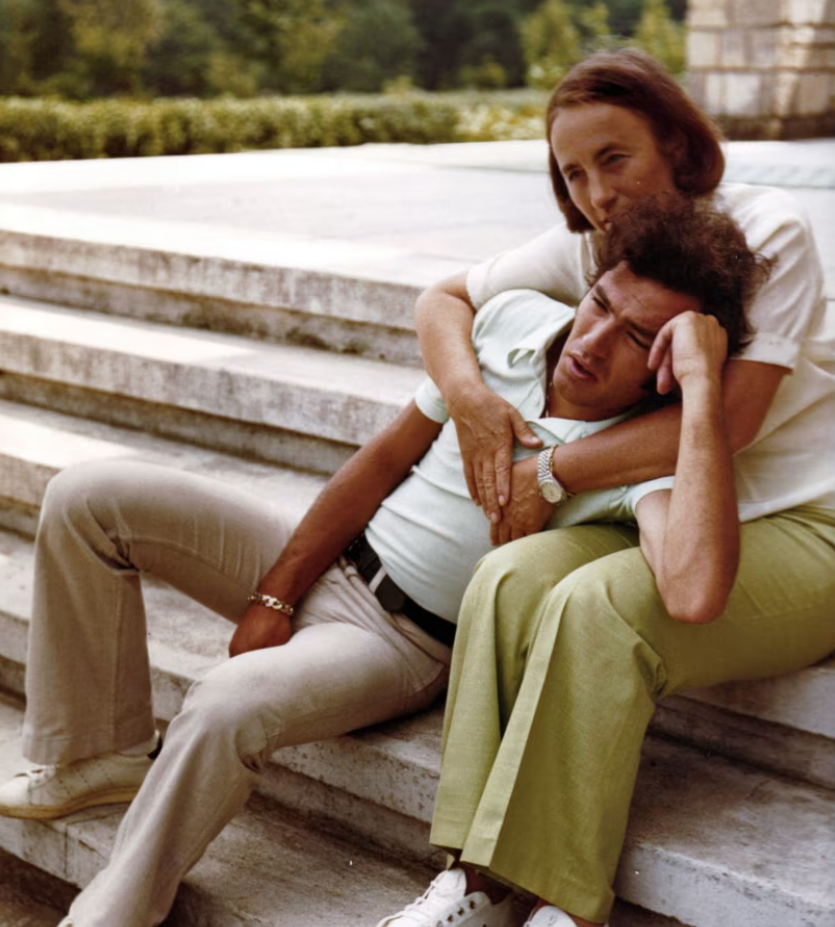
Elena with her son, Nicu.
Word Count 951
From the start, the tour alarmed me. This was not the Romanian story I’d heard. My husband and I had just arrived at the Ceaușescu house in Bucharest and were still slipping plastic booties over our shoes to protect the inlaid teak floors while the guide, gesturing with freshly manicured nails, was going on about Ceaușescu as a great leader, a self-made man. Family people, she called Nicolae and his wife, Elena. Serving their country.
I tried to square this account with the Ceaușescu regime I had heard about: the disappeared people, the devastated economy, the untold sums sunk into grotesque vanity projects, the lies. Thirty-five years after the Ceaușescus were executed for their crimes against Romania, it appears that the battle over their image continues.
The air smelled stale in there under the chandeliers, and I thought about dramatically peeling off the booties and walking out. But I stayed. Did I have to stay, obligated by this political moment in my own country? It felt that way. Maybe I could find in this dictator’s history some kind of map to navigate the rhyming present.
The guide reminded us of the world leaders who dined there, who gave the Ceaușescus various prizes and honorary doctorates. She was about my age, I realized; she would have been young in this era. We paraded past the fine furniture and china, the gold filigree in the bathrooms, the three hundred pairs of shoes in Elena’s closet. Everything was accounted for, the guide explained. All this luxury didn’t belong to them, but to the Romanian people. Never mind, I guess, that the shoes were tailored to her feet and guarded in their mansion.
Then we came to the indoor pool on the ground floor. They swam every day, she said, beneath the garish rainbow mosaic, a million glittering tiles along the full length of the pool. She said it again for emphasis: they swam here every day.
But wait. I’d heard about this pool. The story I’d read was that Nicolae and Elena never used it because they didn’t know how to swim. They were two kids from the countryside who left school after fourth grade, then found themselves in the right place to grab power during a chaotic political transition. When their regime went on to commit atrocities, they erected a facade of genteel society life: degrees they didn’t earn, books they never read, a pool they couldn’t swim in.
The tour ended with a shuffle past the peacocks in the garden and then we were back on the street, blinking in the sunlight, rubbing our temples. What the hell?
Time to make our way to the Museum of Communism in the historical core of Bucharest, home to a different telling. Here were personal testimonies and artifacts from the years when food was scarce. We read about people snatched up and never heard from again, the methods of the secret police. Like many such museums in the former Eastern Bloc, this one was interactive; you’re encouraged to sit on the chairs and fiddle with the dials on the radio, imagining what volume is low enough to be safe, out of the neighbors’ earshot. I picked up a 1960s reading primer for first graders, and on the first page was that ubiquitous photo of a young and smirking Nicolae Ceaușescu, bringer of education and enlightenment to the children of Romania.
Well, that’s enough.
One of the museum docents, a solemn young woman in a dark suit, stood nearby. I began to ask my question about the pool, but hesitated. Such a trivial detail. With all there is to say about the disastrous Ceaușescu regime, how could it matter whether or not they swam in that damned pool?
But I asked, and she nodded, understanding. Getting the history straight, one detail at a time, was the point of this place. She was so young, this earnest person, and so was the colleague she brought over who used to work at the Ceaușescu house. Together we discussed the mystery. The second docent raised her hands to her face and said, “I hated working there so much.” Then she answered definitively: they never swam. Didn’t know how. Rarely, they sat on the stairs at the edge of the pool when their kids got in, but Nicolae and Elena did not. Could not. The pool was for show.
I thanked them, and as I turned away I thought about how neither of them could have been born yet. How is it possible they know this with such certainty?
This is what dictators do, whether from the left or from the right: get the facts to swim around, get us to argue with each other--and in our own heads—about what even happened.
Later, my husband and I sat at a tiny café table in front of the museum as I sipped from a paper cup of nechezol, the Romanian desperation brew during those lean years. Ground coffee was just a fifth of the slurry, and the rest was chicory and barley and who knows what else? Awful, but hot and darkly amusing. We reminisced about the late ‘80s when the two of us were in college, and Romanians were lighting candles because electricity was so spotty and whispering because secret police were everywhere. And also, in some cases it appears, making youthful memories of a brighter hue. All of this is in living memory. And yet, somehow, not.
I expected to feel exultant after my pursuit of truth, but I didn't. I swirled the thick brown liquid, hoping for answers at the bottom of the cup. It’s queasy-making, trying to clear up the past when the present is fluid, too.
Launa’s MFA is in fiction but she writes nonfiction these days, some about education (she used to teach elementary school), and mostly about travel. When their two children grew up, she and her husband sold or gave away all the things, and for three years they've been slowly traveling new continents with a small suitcase and backpack each. She writes about wherever she is at launaatlarge.substack.com