The Gifts that Keep on Coming
Heidi Valantas
Word Count 1347
It arrived a week before Christmas. An ordinary brown box addressed to my husband.
“Another one from my mom,” he held it like it might contain a bomb or a live animal, gently setting it on the counter. I watched him cut through the thick clear tape and pull out a packing slip.
This should be good, I thought. She once gave me chocolate body paint for Mother’s Day, several years before I had children. A breast cancer survivor, she passed around her prosthetic boob at my wedding shower. Root beer floats and popcorn were common breakfast options at grandma’s house.
Michael dug through crumpled tissue paper and pulled out a small, neon green piece of clothing, a cross between a wrestling singlet and a one-piece bathing suit. It took a minute but we eventually worked out that it was a men’s tankini, similar to the one famously worn by Sasha Barat Cohen in the movie Borat. Not exactly something a 40-something-year old father of two would wear to the beach or anywhere else.
So many questions. Where did Lee find this? Did she expect him to wear it? Would she be upset if he returned it for something more useful? I wanted to pick up the phone and call her.
But I couldn’t. She’d been dead for two weeks.
She was shorter and rounder than most. She had a standing weekly appointment with her hairdresser, Becky, who did her signature French twist. Her big smile revealed a line of tiny teeth and one could always expect to find a sandwich bag of Jelly Bellies in her oversized black handbag along with Tylenol, bobby pins and photos of her grandchildren. She was a woman who took her role as a grandma seriously, and not just for the biological ones. Any child in her orbit felt like she was their grandma too. At gatherings, she’d often show up with a bag of small presents, one for every child. One Thanksgiving, she brought a bag of toy turkeys that had a slingshot mechanism and made a horrible screeching noise as they were launched into the air. During dessert, she’d often line up the kids with their mouths open like baby birds as she squirted whipped cream into their mouths one by one.
I was only nineteen when I began dating my husband and she witnessed my growth from teenager to wife and mother. She was an amazing cook, primarily because her main ingredient in every recipe was love. We both loved books, and good coffee and were teachers. Mother daughter relationships can be complicated. She was a mother-like figure who didn’t judge me.
Months earlier, she had been diagnosed with a defective heart valve. Her cardiologist recommended a valve transplant. The surgery would come with a significant amount of risk but seemed like the best option. At that point, she could hardly climb a flight of stairs without stopping to rest.
The procedure involved removing her damaged valve and replacing it with a one harvested from a pig.
“I don’t want a pig valve, ” she joked. “Can they give me one from a lion heart instead?”
For Halloween, she wore a plastic pig nose.
It was easy to think about all the ways the surgery could make her life better. I didn’t think much about the possibility that things might not go well. I couldn’t imagine life without her any more than I could imagine a life without my right arm, or chocolate.
The procedure took place several weeks before Christmas and lasted twice as long as expected. She lost a lot of blood. She wasn’t stable enough to have the intubation tube removed and remained in the ICU. We’d visit her daily, carrying armloads of drawings from the grandchildren, flowers and framed photographs that were placed among the machines and monitors. Unable to speak, her communication was limited to hand gestures and head nodding.
A massive stroke hit her one week after the surgery.The entire left side of her body went dormant. The medical team had concerns about the impact on her cognitive functioning. Initial plans for home health after discharge were discussed. This is not how she would have wanted to live, stuck in a bed, dependent on others for everything.
The wheels were coming off the bus and I didn’t have a clue.
The warning signs were there. I didn’t understand much of the explanations we were given, and I didn’t ask for clarity. I was like a five year old, holding my hands over my ears and repeating “la la la” to myself in order to shield myself from the words I didn’t want to hear or the things I didn’t want to think about. I brought in pictures the boys drew and sent out text messages to update others on her condition. I focused on my doing instead of her dying.
The phone call came early on a Tuesday morning.
The family gathered around her hospital bed. Somebody placed an Iphone on her shoulder, playing Amazing Grace by Judy Collins, one of her favorites, on repeat. Michael broke the silence as the beeping cadence from the screens slowed down.
“We’re all here Mom, we love you, It’s ok if you let go”.
Through half opened eyes, she looked slowly around the perimeter of the bed that was framed by those she loved best. She pulled at her intubation tube, as if she was trying to speak. One of my hands pressed against the rough fabric of her hospital gown, the other rested on my son’s shoulder.
The lines on the monitor went flat.
Later that day, we ended up back in Lee’s living room. There was a comfort in being in the presence of her things: the big stack of books next to her spot on the couch, the cozy blanket she’d lay across her lap, a stack of Christmas cards waiting to be addressed.
A wrapped gift and an envelope sat on the coffee table. My husband’s name was printed in her familiar block printing. It was his birthday. We had all forgotten, but she hadn’t. While preparing for surgery, shopping online for the holidays, and cooking meals that were stacked up in the freezer next to last summer’s halibut and salmon, she had made time to select the perfect birthday card and buy a gift, a New Orleans Saints calendar. That calendar remains in the plastic wrapper today, tucked into a cabinet in his office.
For weeks afterward, a steady stream of gifts rolled in. We had to guess the intended recipient. There were plastic reindeer that dropped brown jelly beans like poop. A sweatshirt that read, “I’m Mom’s Favorite”. (An identical one arrived at Michael’s sister’s house.) The gifts didn’t lessen our grief, but they gave us some much needed laughter and something to talk about instead of the pervasive sadness.
Two days before Christmas, the last box arrived. “I guess she wasn’t done,” my husband said with a hint of a smile. We shared a look of curiosity touched with a little sadness. It was small, square and felt light in my hands when he passed it to me.
“It’s something she thought we couldn’t live without,” I told him. “I’m frightened as to what it might be.”
The tape pulled away easily, there was no tissue paper or packing peanuts.
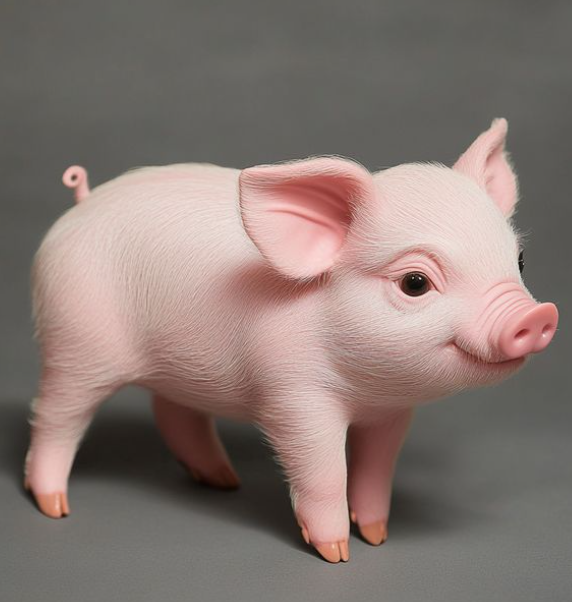
“It’s a pig,” Michael said, as he gently pulled it out of the box. It wasn’t just a pig, it was a pig that oinked when squeezed.
Eventually, this silly little toy ended up at our family cabin on Big Lake, where we’d have bonfires at midnight on the longest day of the year, and make smores as the sun slightly dipped below the horizon. On sunny days, we’d pull the kids behind the boat on an inner tube with Denali in the background.
The pig sat on top of the fridge for years, standing sentry over the grandchildren as they traipsed through the kitchen, dripping lake water and smelling of campfire smoke.
Heidi is a retired teacher based in Anchorage, Alaska is a freelance writer who writes about empty nesting, travel, books and life after 50. She's also currently working on a memoir about caring for her aging parents.