Instructions For Dancing
Karen Harris
Word Count 1633
The red exit signs at the residential school for emotionally disturbed teens stay lit all night. The one above the bathroom used to hang down crooked from the time a kid jumped up and smacked it so hard he broke his hand. Exit signs like this look normal in an office building or dark hospital corridor. But hanging above the doors of the Georgian home the school occupied, they seemed out of place and foreboding, like yellow caution tape across a suburban driveway, or mean eyebrows on an otherwise perfectly nice face.
Aside from this, and despite what went on inside it, the school looked like any other house in the neighborhood. It was set back from a main road in a coastal New England town—the kind with an old candy store, a small stone library, an Audubon store where you can buy binoculars, and plaques on the houses that tell passersby, “This was the house of Ebenezer Grimm, 1789,” etc. The school had no such plaque. It had no curtains, no antiques, and nothing sharp. For the kids who landed at this school inside a house on a setback in a charming seafaring town, it was a last chance placement before long-term, next-level institutionalization.
It was my first teaching job out of graduate school. I was 26 and it was the 90s.
By the time I’d made my way up the cement path to the school’s front door, I could already hear the mayhem. Students clanging around shouting in a giant kitchen that smelled of Costco tubs of peanut butter, old wood, and minty industrial-strength cleaner. And the voices of residential staff humming low and tight underneath, nerves already frayed at 7:00 a.m. Even the seagulls circling the house squawked like they deserved better. I thought about turning around and getting back into my car, a VW Fox that had smelled like cat urine since the most recent Christmas I drove with my cat up to my parents’ house in New Hampshire.
I was shown to a metal cabinet in the staff room and given time to read the students’ case files. They were all riffs on the same story–a Madlib of abuse and neglect that swapped out adult villains, small children, juvenile offenses, institutions, and court dates. Yet there was no trace of shock or alarm no matter the severity of the details –an incongruence that made me double back, read again, feel crazy and then get dizzy. I felt something in me coming unzipped that I didn’t even know had zippers, and then the sensation of getting knocked off my stool.
About once a day, a kid would have to be restrained by a team of four staff, each in charge of holding down one thrashing limb. One afternoon right after I took the job (a grant-hired “writing consultant”) I was in my attic office on the phone with my mother when a restraint broke out two floors below. What’s that screaming in the background? Aren’t you at work? She didn’t know about the file folders, or the kind of school it was, or that my main job here was to stay out of the way.
Rarely, I’d get a chance to work one-on-one with a student, like I did with Tyrone, a 17-year-old whose singular focus was to learn cursive. He built me a rocking horse in woodworking, painted it light blue, and gave it to me for the kid he assumed I had. He wrote his name on the seat in chunky brown painted letters, and so it looked like the horse belonged to a child named Tyrone.
A week after the rocking horse, I watched Tyrone get restrained. He’d pushed another student in the chest, hard, and was yelling threats– I heard stab and throat. A staff member cornered him and said, “Get yourself to the floor, Tyrone.” He got on his knees like a man praying, head down. Even on his knees, Tyrone was as tall as a short man, his oversized shirt draping the mast of his body like an altar boy’s cassock. He waited. The team moved to him, and it began.
Bodies moved in concert, feet planting and hands reaching. There was steady grabbing and firm holding, then an aggregate of five bodies moving groundward. The procedure answered to its own choreography like an old parlor dance, with cues, actions, pauses, and permissions: You do this, I do that, now together we do this. They lowered Tyrone and flipped him onto his back in one coordinated movement, like easing a long child into the river for a baptism. Once Tyrone was prone and face up, he kicked and arched, cursing and flailing. He yelled to the staff members looking down at him, to no one and everyone: I hate you. Fuck her! No! Fuck! I hate this place! He broke a fist free and started banging his head with it as hard as he could.
When the restraint was over, Tyrone was on the floor in the middle of the room crying quietly, the neutral weight of eight hands holding him in place. The laying on of hands. I sat on the stairs next to Derek, a staff member, and tried to hide my own crying by examining the layers of peeling wallpaper. Derek was in his mid 30s with gray military hair, socks with sandals, a Def Leppard t-shirt. He leaned his head over toward my head and said, “Everyone needs this, youknow?” I didn’t know.
Or maybe I did know--just not like I know now. These episodes were more than just all hell breaking loose. They were a means of holding but not extinguishing the bewildered rage of kids who had pain to unleash and nowhere good to put it. Looking back, it was the least we could do for them. Attachment theorists say we all are born into chaos rooting around for a reliable container, and that if we’re lucky, it’s our mother. Later, maybe it’s a weighted blanket, a mentor, or the clarity of a line in the sand. Other people’s stories. Innings. Chapters. Stanzas. Confessions. Rituals. Instructions for dancing.
My dog tests me. He follows me when I get up to leave the room and leans into my legs with his thick body so hard I have to plant my feet and push into him to keep from stumbling over. He looks up at me when he does it, embarrassed like it wasn’t his decision. His body is pressing mine for data about where he stands. Who are we to each other? He’s assessing where I end and he begins, thus keeping both of us from falling off some edge and floating away like snowflakes with no gravity. We balance like that, a stalemate in the middle of our small darkening kitchen. I lean in harder and stand my ground. We’re solid, my legs tell him. Stay.
I often think of Tyrone on the floor looking up at the faces of the adults he had kicked against, spit at, and resisted with all his might before his own body folded and rested, knowing they weren’t fighting back or backing down--or leaving. I think of my feet pushing into the shoulders of the tiny and sturdy midwife who was ordering me around in her East Boston accent so I could push out my pointy-headed baby. I think of my own kids when they were small, railing at the careless injustices of the world (dead good Cedric Diggory, the “elaborate ruse” of Santa Claus), and later at me, I hateyou!
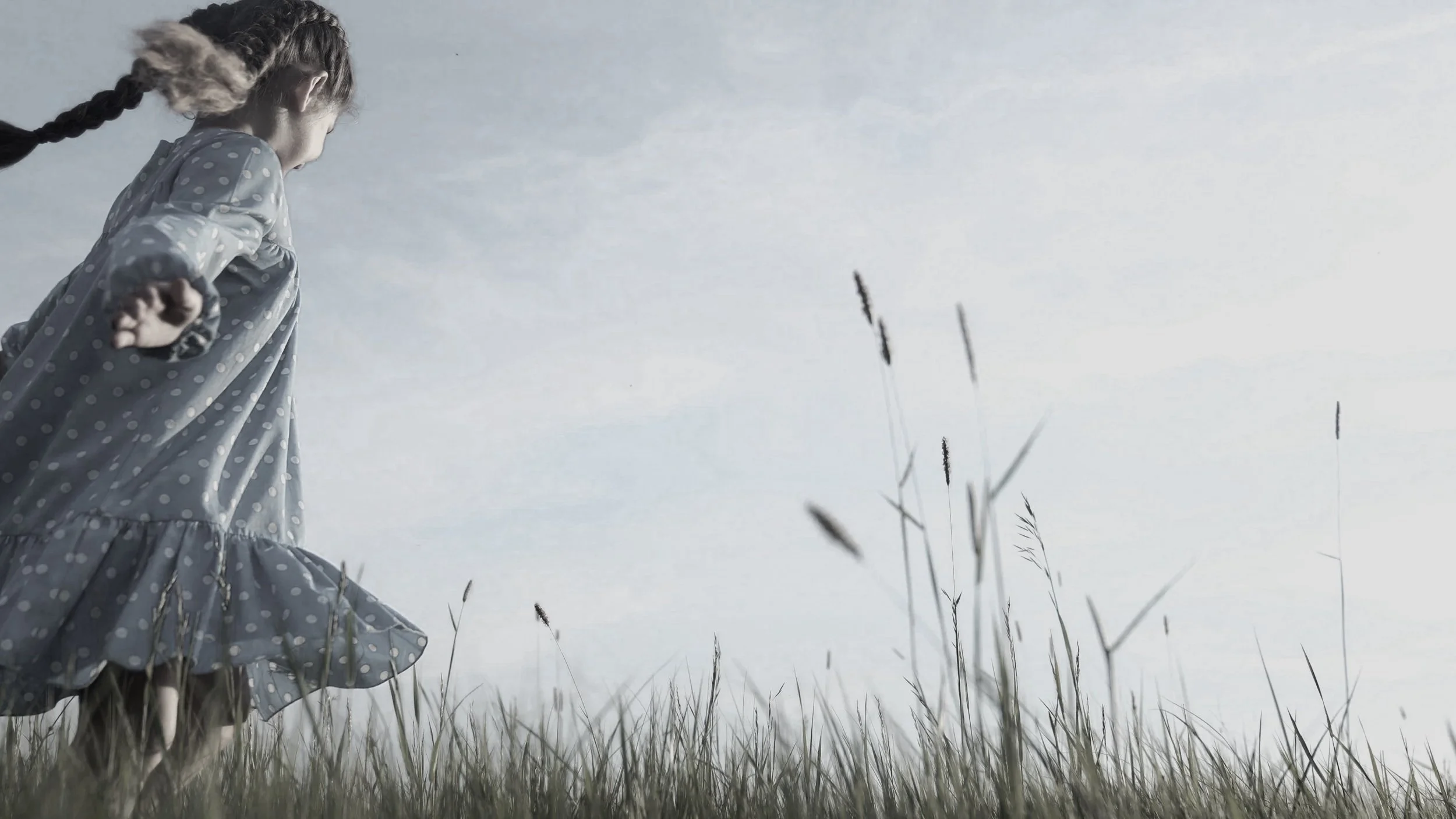
During Covid, my daughter tried to teach me dance choreography with videos, but I found it impossible to follow even the simplest sequence of steps, which they call a “phrase” in the dance vernacular. My daughter, though. She just watched the dancer in the video once through and then reproduced it on our lawn perfectly, and way better. I gave up my own trying and sat down on the grass to watch her. It was a wonder and nothing less.
I only lasted another couple months at the school after Tyrone’s restraint. I wasn’t good at staying out of the way, or at keeping the bad things in my head from bleeding into each other: The scale of need, the horrors in those files, the limits of what books and writing can do, the limits of what I would be able to do, the myth of grit and resilience. I didn’t know how to titrate what I was seeing and hearing, to try to build a solid understanding in layers, bit by bit. I didn’t know that with a job like that, you have to find ways to wipe the slate clean so you can start fresh again the next day.
These are things I know now, after so many years of teaching and being a parent and living. But it’s like with the dancing. You know the steps in your head, but it’s easy to get pulled here and there and thrown off balance. The slate doesn’t ever get clean.
The thing they say, and they’re right, is that you can’t just keep on with the endless questioning about unfairness. If you do, you’ll just spin yourself into a hole, and then what good are you to anyone? Take the impossible riddle (for example) of why Tyrone got his brutal choreography while my daughter got to dance on the lawn like that. It can really make your head spin if you think about it too much. Or if you just think about it at all.
Karen is a writer, musician, former high school English teacher, and teacher-educator. Her essays have appeared in Pangyrus, The Boston Globe, Cogniscenti, and elsewhere. She's been the songwriter/singer/guitar player in two Boston-based bands: The Vivs, and Edith, and lives in the Boston area with her family and dogs. You can find her online at karenharris.substack.com, where she writes about literature, teaching, birds, rock and roll, and getting old(er)